Ba Duan Jin · Eight Pieces of Brocade
A practitioner's eight-brocade set, captured with five synchronized cameras and solved frame by frame onto a full-body rig — then handed to you as something you can orbit, halve the speed of, and loop three seconds at a time.
Movement has always been taught body to body; video flattened it to one seat in the room. YT Life is building the instrument that puts the whole body back in the lesson — this studio is its first working piece.
Why a video isn't enough
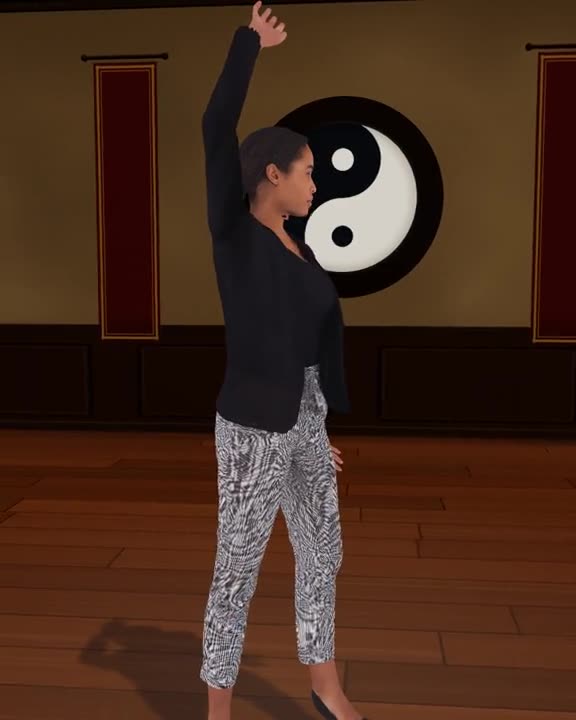
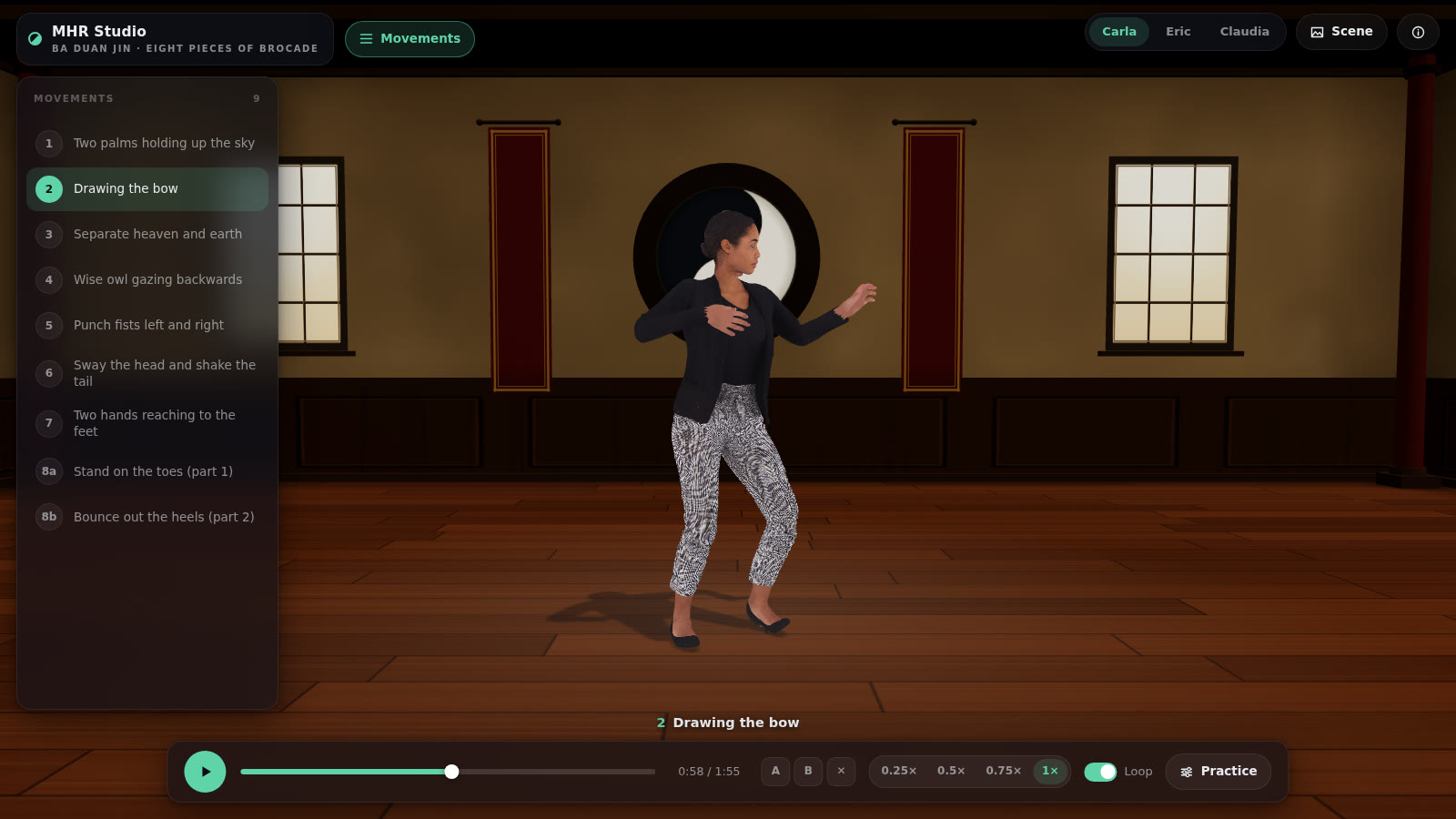
Every instructional video was shot from wherever the camera happened to stand. When the movement turns away from it, the detail you needed turns away too. This is the same performance, but the viewpoint is yours.
Orbit, move in close on the hands, drop to floor level to read the stance. The motion keeps playing while you move.
Quarter, half, three-quarter speed — the transitions that blur past at full tempo are where the technique actually lives.
Mark A, mark B, and the passage repeats until your body has it. Set it on the wrist rotation and leave it running.
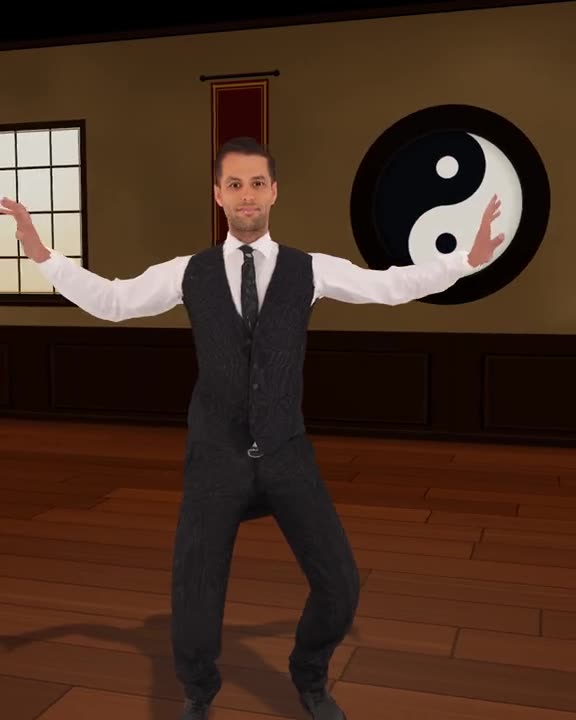
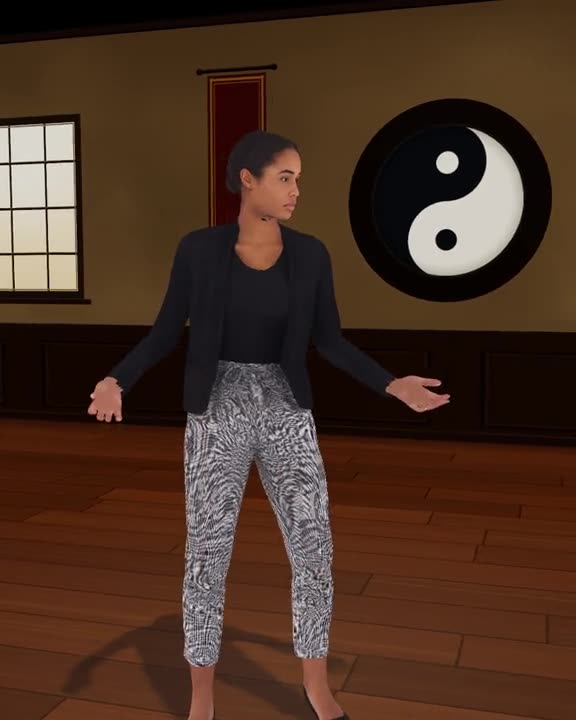
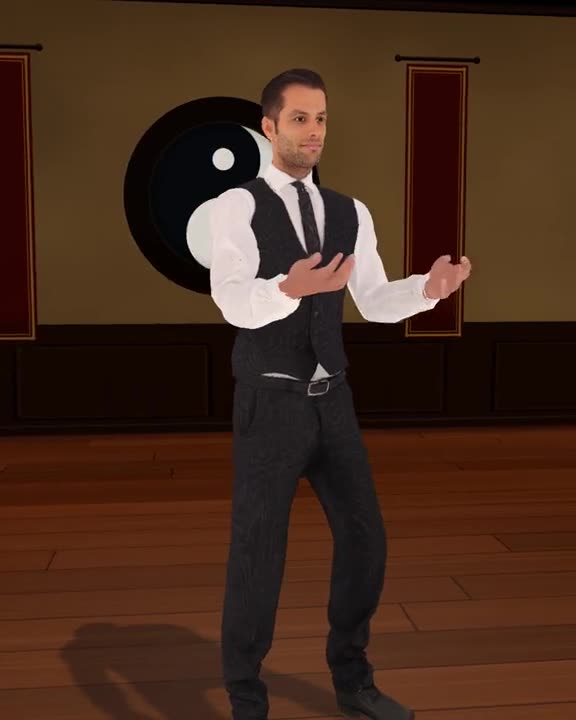
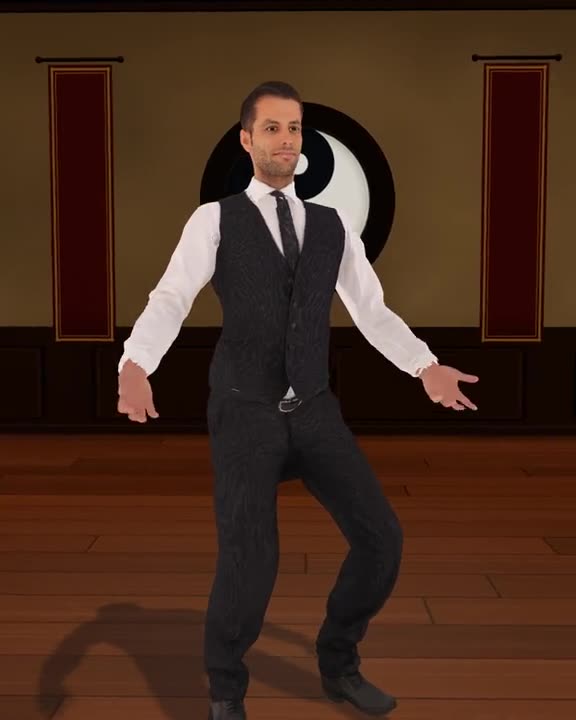
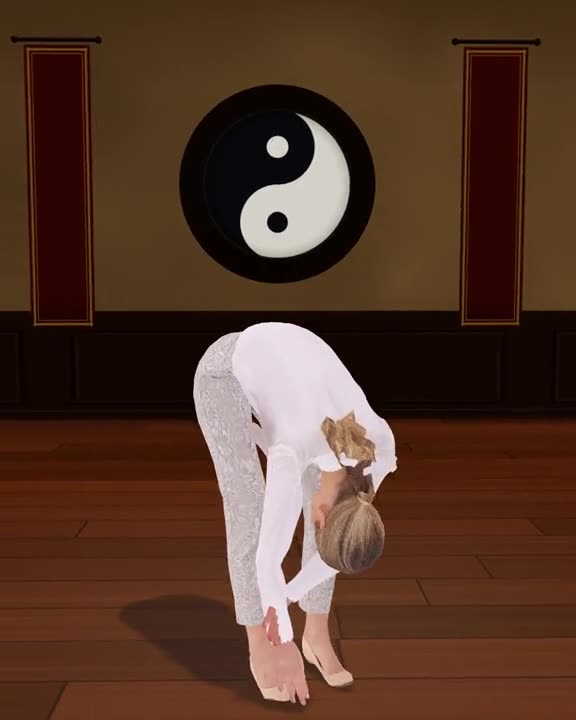
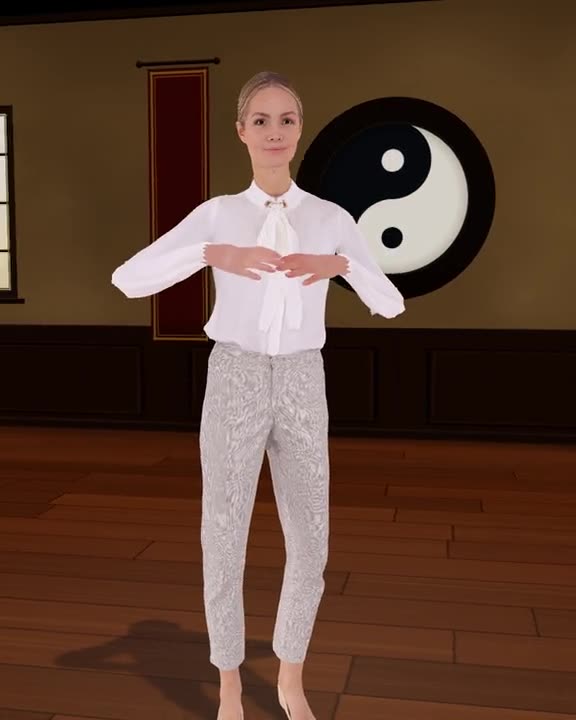
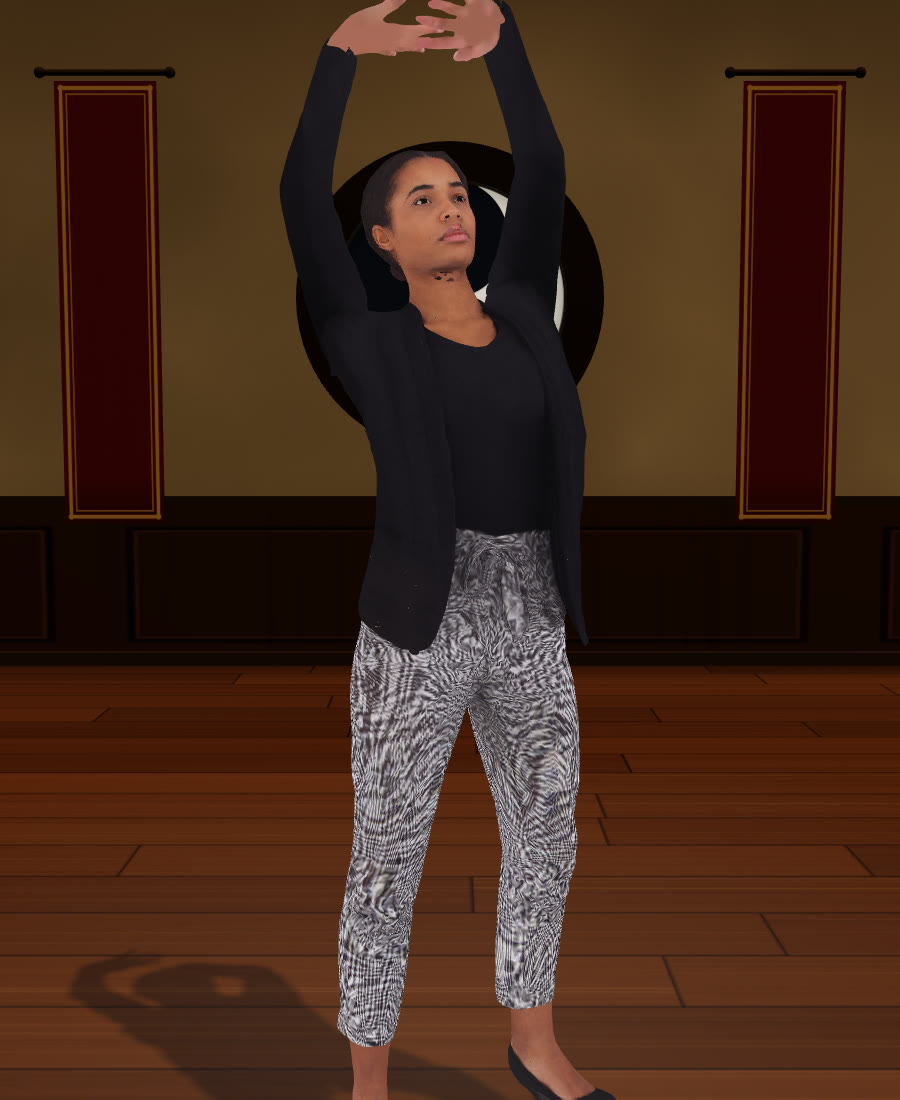
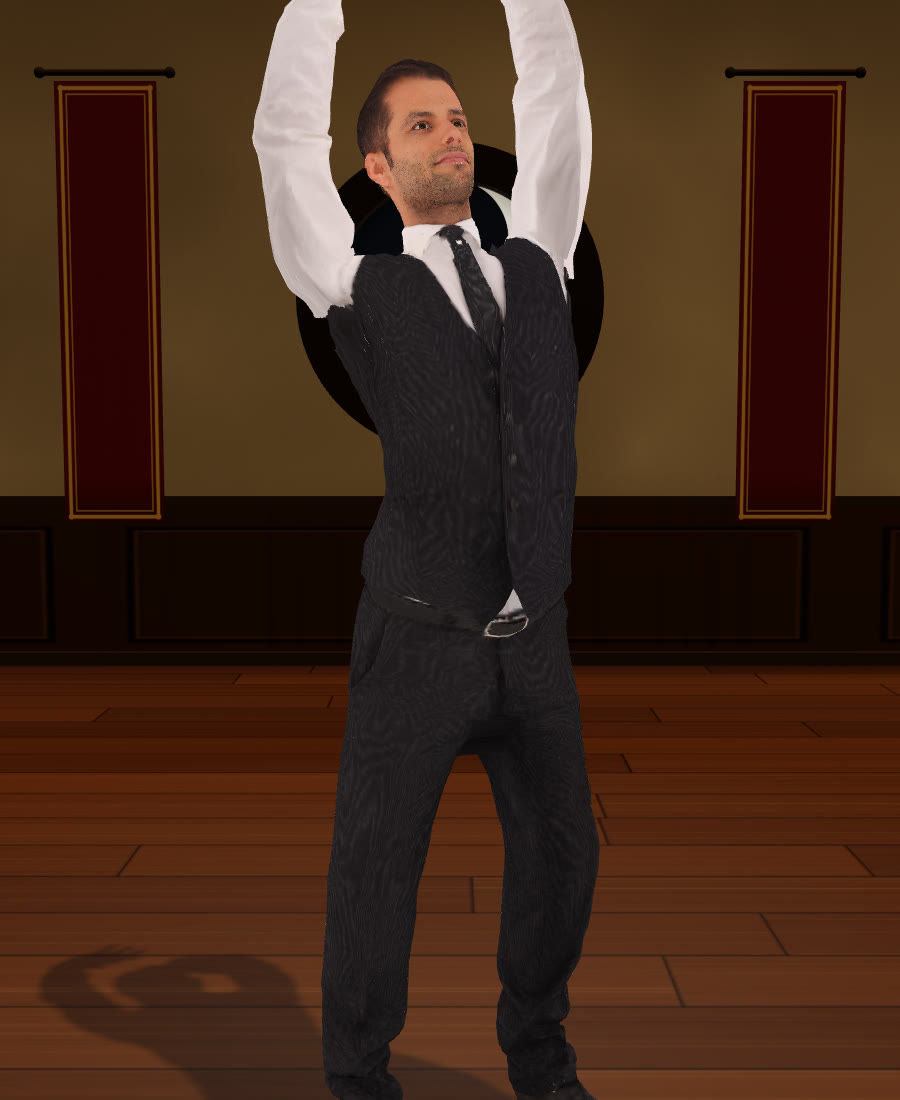
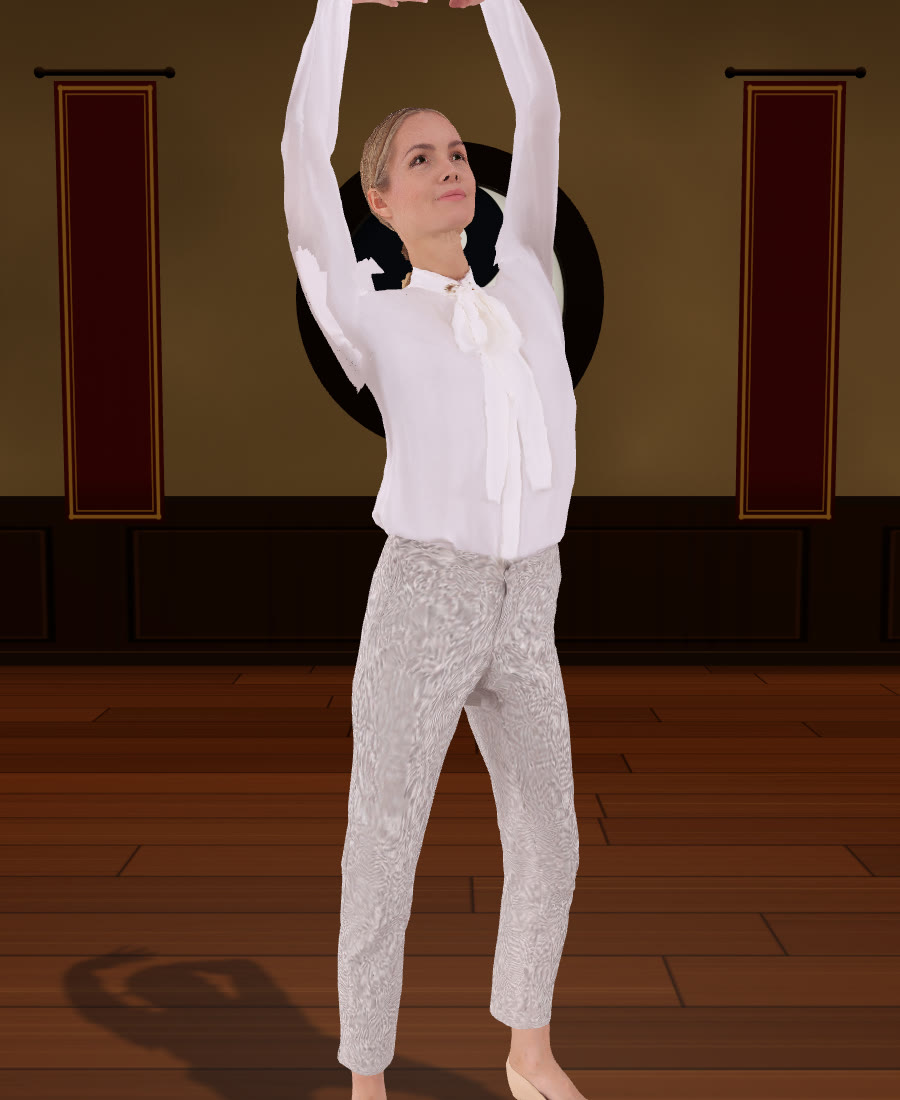
Three avatars carry the same performance. Watch the form on a build closer to your own — proportions change how a movement reads.
A wooden practice hall by default, or step the form into a scanned basilica, gallery or garden.
It runs in the browser on ordinary hardware. No plugin, no download, no dedicated graphics card.
The set
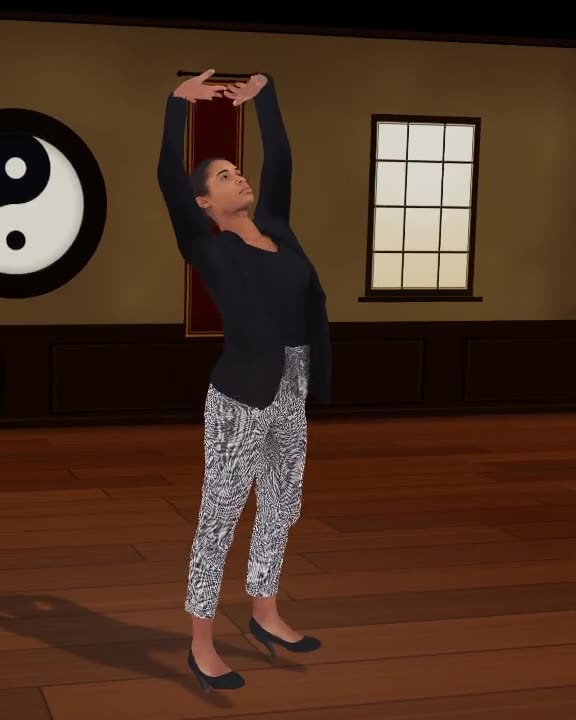
A thousand-year-old health form, performed by one practitioner and recorded end to end — no cuts, no cleanup between repetitions. Hover any panel to watch it move.
play
play
play
play
play
play
play
play
How it's made
No suits, no markers, no gloves. The practitioner performs the form in an ordinary room; everything after that is solving.
Five synchronized cameras, calibrated to each other, running the full set end to end at sixty frames a second.
A whole-body detector marks 133 points per camera — face, torso, feet and, critically, every finger joint.
Those views are fitted to a parametric human rig (Meta's openly licensed MHR): one identity, calibrated once from a calibration hold and frozen, so the skeleton never quietly changes size mid-form.
Arms disappear behind the back; hands cross the body. Occluded spans get a second opinion from a single-image 3D model, and the result is checked joint by joint before it's accepted.
Automatic gates measure limb penetration, per-frame rotation jumps and fit residuals. A take that fails doesn't go in the studio.
The details
A form is judged by whether it looks right, and what breaks that illusion is rarely the big movement — it is a finger passing through a thigh, or a wrist snapping between two frames. Those are the things the pipeline is built to catch.
Fingers are small, fast and constantly hidden behind each other — and they are the first place your eye goes when something is wrong. The solve weights them accordingly, and holds them steady across neighbouring frames rather than letting them flicker.
An arm sweeping behind the back is invisible to most of the rig. Those spans are identified and given a second opinion, then checked joint by joint before any of it is accepted.
Every rebuild re-measures limbs passing through the body, frame-to-frame snapping and how far the body sits from what the cameras saw. A take that fails is not quietly published — it goes back.
One performance, three bodies
Motion and body are kept separate, so any avatar can perform any take. Proportions change how a movement reads — a reach that looks generous on one frame looks compressed on another, and seeing both is the point.


The studio
The channel atlas · 经络图谱
Acupuncture's channel-and-point map has lived on flat charts for centuries. Here, the WHO's standard point locations — all 361 of them, across the fourteen channels — are solved onto the same captured body that performs the form, each point carrying its source text and its classical needling depth. A flow animation traces the circulation sequence the classical literature describes, breath by breath.
Every point is constructed from the written rules of the WHO Standard Acupuncture Point Locations (2008) — solved onto the body's surface, with the page reference a click away. Where a location rests on soft tissue the atlas says so, plainly.
Switch to x-ray and the points sink to their classical depths — the Lingshu's own per-channel figures, drawn to scale inside the body rather than printed as a footnote.
The flow animation follows the classical sequence — lung to liver and around again — as one continuous cycle. An illustration of the traditional model, presented as exactly that.
The road ahead
What exists today is one practitioner's set, performed by borrowed bodies. The work underway points it at you.
That is the studio's own creator, reconstructed from a capture session into geometry that carries his build, his clothing and his face, then rigged so any of the practitioner's takes can drive it.
Getting here currently takes a rig and a room. The work below is about getting here from a phone.
The bodies in the studio began as scans. The same reconstruction that turns a capture into a mesh can be pointed at footage you already have — a few passes around yourself — and give the studio a body with your proportions instead of a stand-in's.
Motion and body are deliberately kept apart, so a take can be replayed on any build. Carrying it onto your mesh is the same problem one step harder: a reach has to clear your frame, at your limb lengths, without borrowing someone else's proportions to do it.
Record yourself doing a movement and have it solved by the same pipeline that solved the reference. The comparison is where instruction begins: which joint arrived late, where the weight shifted early, and which of those differences actually matter.
The WHO-standard channel-and-point atlas is now explorable on the captured body — see it above. Next: the same points riding the moving form itself, so the map travels with the practice.
Your practice
A teacher's form is the thing they spent decades building. It is treated here as theirs, not as a file to be passed around.
Streamed, never downloaded. Movement data is fed to your session as it plays and lives only in memory. There is no motion file to find in a cache.
Signed in, always. Every avatar and every take is delivered against your session and marked never-to-be-stored.
Credited where it's due. Scanned practice environments carry their creators' names and licences in the studio's credits panel.
Begin
Open the studio, pick a movement, and take it apart at whatever speed the form deserves.